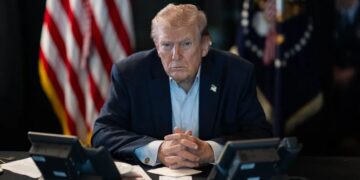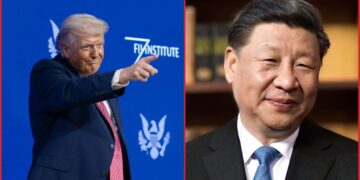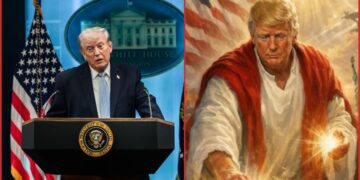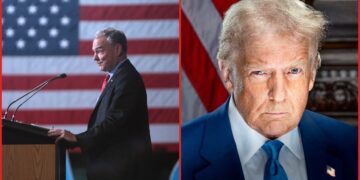

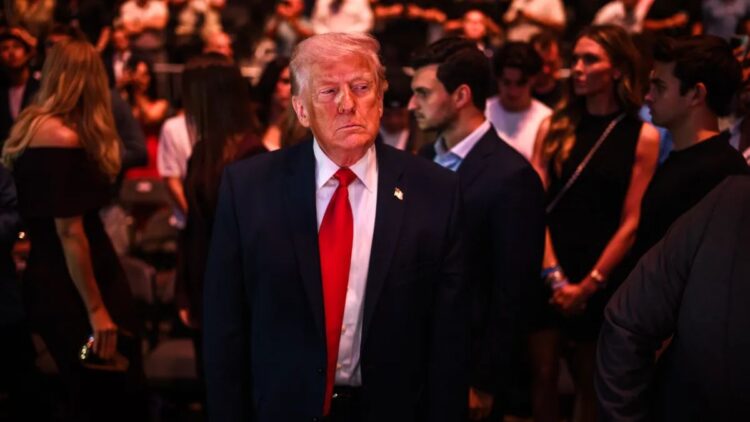
Donald Trump followed through on his biggest threat yet against Iran on Monday. After weekend peace talks in Islamabad collapsed without a deal, the US Navy officially began blocking all ships from entering or leaving Iranian ports in the Strait of Hormuz. Now Trump is warning any Iranian vessel that gets close to the blockade zone will be destroyed on sight.
“If any of these ships come anywhere close to our BLOCKADE, they will be immediately ELIMINATED, using the same system of kill that we use against the drug dealers on boats at Sea,” Trump wrote on Truth Social, as reported by CNBC. “It is quick and brutal.” A White House official confirmed to the outlet that the blockade officially took effect at 10 a.m. ET Monday.
The escalation follows days of diplomatic back-and-forth that ended in failure. As previously reported, Trump had warned he would resume strikes and deploy heavier weapons if the Islamabad talks fell through. That moment has now arrived, with the blockade serving as his opening move.
What broke down in Islamabad
The US delegation was led by Vice President JD Vance, alongside Special Envoy Steve Witkoff and senior adviser Jared Kushner. The three spent more than 21 hours in talks with Iranian and Pakistani negotiators. According to Time, most issues were worked through, but the nuclear question proved to be the dealbreaker.
“So, there you have it, the meeting went well, most points were agreed to, but the only point that really mattered, NUCLEAR, was not,” Trump posted on Truth Social after the breakdown. Tehran has consistently maintained that its nuclear program is for civilian purposes and refused to give up uranium enrichment entirely.
Iran’s demands going into the talks included recognition of its authority over the Strait of Hormuz, war reparations, a regional ceasefire covering Lebanon, and the release of its frozen assets abroad. The US rejected the Hormuz control demand outright, and that sticking point, combined with the nuclear impasse, left talks without a resolution.
What the blockade actually covers
US Central Command clarified that the blockade targets ships entering or leaving Iranian ports and coastal areas in the Arabian Gulf and Gulf of Oman. It does not restrict passage through the strait itself for vessels headed to non-Iranian destinations.
Trump also instructed the Navy to intercept any vessel in international waters that has already paid a toll to Iran. “No one who pays an illegal toll will have safe passage on the high seas,” he said. Iran had been charging ships up to $2 million per crossing to transit the strait since the ceasefire began.
On Fox News, Trump made the scope of the US position plain. “We’re not going to let Iran make money on selling oil to people that they like,” he said. “It’s going to be all or none, and that’s the way it is.”
Iran pushes back hard
Tehran is not backing down. The Islamic Revolutionary Guard Corps announced that any military vessel approaching the strait will be treated as a ceasefire violation and will receive what it described as a “severe response,” according to Al Jazeera. Iran’s IRGC also claimed the strait remains under its “smart management.”
Iran’s First Vice President Reza Aref stated that control over the Strait of Hormuz is a right of the Iranian people, and that the country also expects war reparations from the US and Israel.
Analysts have flagged that a US naval blockade could be interpreted by Iran as an act of war, raising the risk of fresh military conflict. Meanwhile, the US Justice Department separately announced it would prosecute anyone who purchases sanctioned Iranian oil, with Acting Attorney General Todd Blanche posting that the department “will vigorously prosecute anyone who buys or sells sanctioned Iranian oil.”
Global fallout is already building
The Strait of Hormuz is the world’s most critical oil chokepoint, handling roughly one-fifth of global crude supply. It has been largely closed since the US-Israel military campaign against Iran began on February 28, triggering a 27% decline in OPEC oil output in March. US stocks fell and oil prices surged ahead of Monday’s blockade start time.
Qatar reached out to Iran directly on Monday, with the country’s prime minister urging that maritime routes should not be used as a bargaining chip. The UK also called for the strait to reopen, saying it was “urgently needed to support the global economy,” according to the BBC. Gulf allies have reportedly already started assisting the US effort, though Trump declined to name them specifically.
Despite the collapse of talks, Vance said diplomacy is not entirely finished. “We leave here with a very simple proposal,” he said in Islamabad. “We’ll see if the Iranians accept it.”
Democratic critics have been watching the situation closely. Chuck Schumer previously blasted Trump for his inflammatory rhetoric around Iran, calling his messaging erratic. With a live naval blockade now in place and Trump threatening to obliterate any Iranian ship that challenges it, the pressure on both sides has reached a new high.