
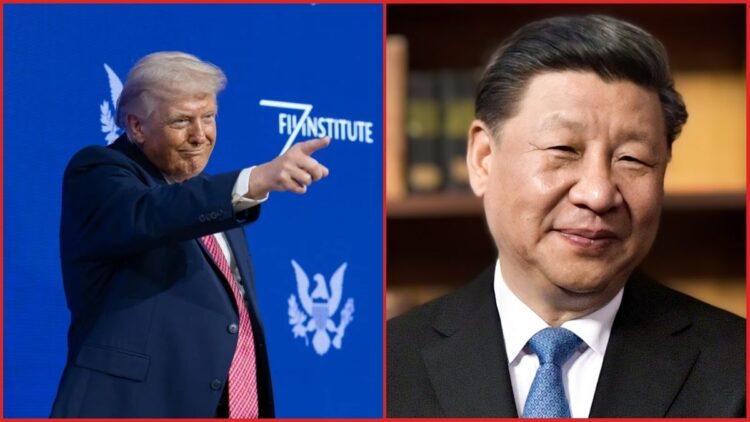
Donald Trump put China on notice Saturday, warning that Beijing would face “big problems” if it follows through on reported plans to ship air defense weapons to Iran during an already fragile ceasefire. The blunt threat landed just weeks before Trump is scheduled to sit down with Chinese President Xi Jinping in Beijing for a high-stakes summit.
“If China does that, China is gonna have big problems, OK?” Trump told reporters as he departed the White House for Florida on Saturday, according to Fox News. The president was reacting to U.S. intelligence assessments, first reported by CNN, indicating that Beijing is preparing to transfer man-portable air defense systems, known as MANPADS, to Tehran, potentially routing them through third-party countries to conceal their origin.
The shoulder-fired missiles are heat-seeking, lightweight weapons capable of being operated by a single soldier. They lock onto an aircraft’s engine heat and are designed to take down low-flying planes, helicopters, and drones. The weapons pose a particularly serious threat to U.S. military aircraft, which have been operating over Iran throughout the five-week conflict. Trump himself pointed to a related incident weeks earlier, saying an American F-15E fighter jet downed on April 3 was struck by a “handheld shoulder missile, a heat-seeking missile.”
Why this matters for the Trump-Xi summit
The timing of the intelligence report adds serious pressure to U.S.-China relations at an already sensitive moment. Trump and Xi were originally set to meet earlier but postponed the summit due to the ongoing conflict. The two leaders are now expected to hold talks in Beijing next month, with trade tensions, Taiwan, and the Iran war all on the agenda.
Trump declined to say whether he had spoken directly to Xi about the matter. But the warning is far from empty. The Federal reported that Washington has already threatened 50 percent tariffs on any country supplying military equipment to Iran, raising the stakes considerably for Beijing.
China pushed back hard. The Chinese Embassy in Washington issued a flat denial, saying Beijing “has never provided weapons to any party to the conflict” and calling the reports untrue. Embassy spokesperson Liu Pengyu urged Washington to stop making what he called “baseless allegations.” Chinese officials have also publicly credited themselves with supporting the ceasefire and pushing for de-escalation through diplomatic channels.
What the intelligence actually shows
U.S. officials have been careful to note that the intelligence is not definitive. There is no confirmed evidence that any MANPADS have already been transferred or used against American or Israeli forces. But the concern is real enough to prompt a presidential warning.
U.S.-China tensions over Iran have remained elevated since the war began in February, with separate allegations that Chinese companies including chipmaker SMIC had previously supplied tools and satellite imagery to the Iranian military. China denied those claims as well.
The ceasefire between Washington and Tehran has been described as fragile, and talks held in Islamabad over the weekend failed to produce a lasting agreement. That backdrop makes the prospect of China rearming Iran even more alarming to U.S. officials who worry Tehran is using the pause in fighting to restock its military capabilities.
It is also worth noting that Chuck Schumer has already blasted Trump for his handling of the Iran situation, while the president has shown he is willing to assert broad authority in the region, including claiming sweeping power over Cuba policy.
For now, Beijing’s position remains that it is a neutral mediating force. But if U.S. intelligence proves correct, the Chinese government would have been quietly rearming one side of an active war while publicly calling for peace, a contradiction that could unravel what little diplomatic progress has been made heading into the May summit.