

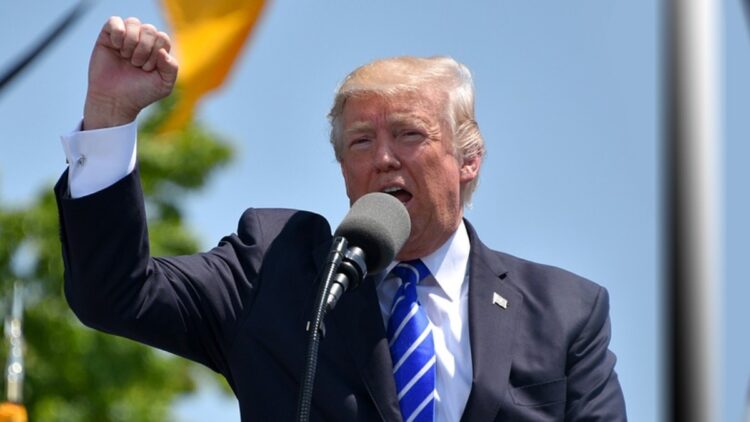
Donald Trump issued a stark military warning to Iran on Friday, saying US warships are being restocked with more powerful weapons and strikes will resume if peace talks in Pakistan collapse. A 24-hour deadline now hangs over a two-week ceasefire that both sides have already accused each other of violating.
Speaking to the New York Post in a phone interview, Trump said the US military is in a “reset” ahead of the weekend negotiations in Islamabad. “We’re loading up the ships with the best ammunition, the best weapons ever made, even better than what we did previously, and we blew them apart,” he told the outlet, as reported by CBS News. “And if we don’t have a deal, we will be using them, and we will be using them very effectively.”
When asked whether he expected the talks to succeed, Trump kept his answer short. “We’re going to find out in about 24 hours. We’re going to know soon,” he said.
Vance heads to Islamabad with a stark warning
JD Vance departed for Islamabad on Friday aboard Air Force Two to lead the US negotiating team. He was joined by Special Envoy Steve Witkoff and senior adviser Jared Kushner for what the administration is billing as high-stakes talks to lock in a permanent deal. This follows Vance, Witkoff, and Kushner’s earlier mission to Pakistan that helped broker the current two-week pause in fighting.
Before boarding his flight, Vance offered measured optimism about the talks but made clear that Iran’s conduct at the table will determine the outcome. “If the Iranians are willing to negotiate in good faith, we’re certainly willing to extend the open hand,” Vance said, according to Newsweek. “If they’re going to try to play us, then they’re going to find that the negotiating team is not that receptive.”
Trump also expressed frustration at what he described as contradictory signals from Tehran. “You’re dealing against people that we don’t know whether or not they tell the truth,” he said. “To our face, they’re getting rid of all nuclear weapons, everything’s gone. And then they go out to the press and say, ‘No, we’d like to enrich.'”
What’s on the table in Islamabad
Iran is expected to send Foreign Minister Abbas Araghchi and Parliamentary Speaker Mohammad Bagher Ghalibaf to the negotiations. But Ghalibaf added conditions before the talks even begin, saying Tehran requires a ceasefire in Lebanon and the release of Iran’s frozen assets before formal negotiations start.
The key issues on the agenda include Iran’s enriched uranium stockpile, the reopening of the Strait of Hormuz, Iran’s ballistic missile program, its support for regional proxy groups, and Tehran’s request to have US sanctions lifted. Others reported that handing over roughly 1,000 pounds of enriched uranium and guaranteeing free passage through the Strait of Hormuz are the two issues Washington considers non-negotiable.
The Strait, which handles around 20 percent of the world’s daily oil supply, has remained largely blocked since US strikes began. NPR reported that over a hundred ships were still stalled in the region despite the ceasefire announcement, with ship owners and insurers waiting for clearer signals before resuming normal routes.
Ceasefire already under strain
The current truce has shown cracks on both sides. Israel carried out a major wave of strikes in Lebanon on Wednesday, killing more than 250 people. Iran’s delegation called the strikes a serious obstacle to negotiations. Ghalibaf said in a statement that talks become “unreasonable” when Israeli attacks on Lebanon are continuing.
The US and Israel each accused Iran of violating the ceasefire in return, with both sides trading blame as diplomats were still en route to Islamabad.
Trump has previously threatened Iran with total destruction ahead of the ceasefire deadline, and Friday’s comments made clear that threat has not gone away. On Truth Social, he wrote that if a deal falls through, “the ‘Shootin’ Starts,’ bigger, and better, and stronger than anyone has ever seen before.”
Gas prices meanwhile remained elevated heading into the weekend. The national average for a gallon of gas stood at $4.16 on Friday, well above the pre-war average of under $3 in February, according to the Daily Beast.