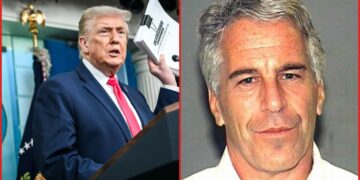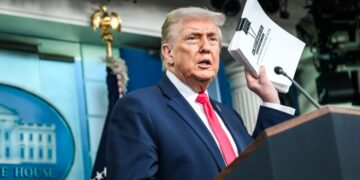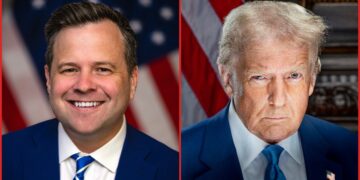

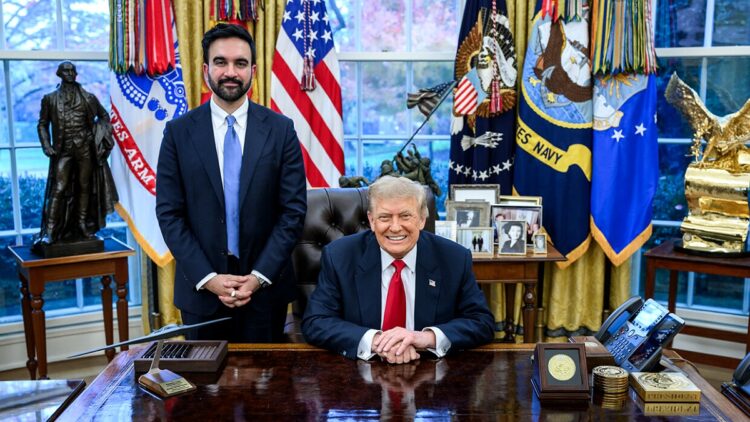
Donald Trump publicly blasted New York City Mayor Zohran Mamdani on Thursday, accusing him of wrecking the city with his tax-the-rich agenda. It marks a sharp turn from the surprisingly warm relationship the two had built since Mamdani took office.
The outburst came after Mamdani rolled out his support for a new pied-à-terre tax on luxury second homes, a proposal championed by New York Governor Kathy Hochul. Newsweek reported on the president’s Truth Social post, in which he wrote: “Sadly, Mayor Mamdani is DESTROYING New York! It has no chance! The United States of America should not contribute to its failure. It will only get WORSE. The TAX, TAX, TAX Policies are SO WRONG. People are fleeing. They must change their ways, AND FAST. History has proven, THIS ‘STUFF’ JUST DOESN’T WORK.”
What the new tax actually does
The pied-à-terre tax is an annual fee on luxury properties valued above $5 million whose owners do not live in New York City full-time. Mamdani described it as a levy aimed squarely at the ultra-wealthy, saying in a video on social media: “When I ran for mayor, I said I was going to tax the rich. Well, today, we’re taxing the rich.”
The tax is projected to bring in at least $500 million a year for the city, according to Mediaite. Mamdani said the money would fund free childcare, cleaner streets, and safer neighborhoods. He also argued the policy targets a “fundamentally unfair system that hurts working New Yorkers,” pointing to luxury units that sit empty most of the year because their owners live elsewhere.
Governor Hochul formally backed the proposal and framed it as a fairness issue. “If you can afford a $5 million second home that sits empty most of the year, you can afford to contribute like every other New Yorker,” she said. The tax is meant to help close the city’s $5.4 billion fiscal gap heading into the next fiscal year.
A friendship that didn’t last
The timing is notable. Just hours before Trump’s post, Mamdani appeared on CBS Mornings and told viewers that he and the president still agree on certain things about New York. That goodwill did not survive the day.
The two had built an unlikely rapport after Mamdani won the 2025 mayoral race. During the campaign, Trump had attacked him repeatedly, even endorsing former Gov. Andrew Cuomo to block Mamdani’s path to City Hall. He also threatened to cut off federal funding to New York if Mamdani won. But after the election, things softened. They met at the White House in November, and Mamdani later described it as productive. A second meeting followed in February to talk housing. Trump had also previously shared controversial religious imagery on social media amid separate controversies, but this week his attention turned squarely to New York’s fiscal politics.
Now that Mamdani has crossed the 100-day mark and moved aggressively on his progressive platform, the relationship appears to have hit a wall. At a rally marking his first 100 days in office, Mamdani said: “No longer will city government be afraid of its own shadow. If anyone should be afraid, it is those who take advantage of working people.”
What’s at stake for New York
Trump’s post raised the possibility that federal support for New York City could be at risk, though as of Thursday, no funding changes had been announced. The administration has not taken any concrete steps to pull back federal cooperation with the city.
Still, the broader economic stakes are real. Mamdani’s campaign promises, including a rent freeze and potential tax increases on high earners, still face resistance from business groups and conservative lawmakers who argue the policies could push residents and investment out of the city. Those concerns mirror Trump’s own argument, and his post signals he plans to keep that pressure on.
The pied-à-terre tax itself has faced opposition before. Previous efforts to pass a similar measure in New York collapsed as recently as 2019, largely due to pushback from powerful real estate developers. Whether it clears those same hurdles this time remains to be seen.
It is worth noting that Trump, who made his name as a New York real estate developer, previously maintained his primary residence at Trump Tower in Manhattan before relocating to Mar-a-Lago in 2019. His administration’s energy policies have also drawn scrutiny for their potential financial impact on ordinary American households.