
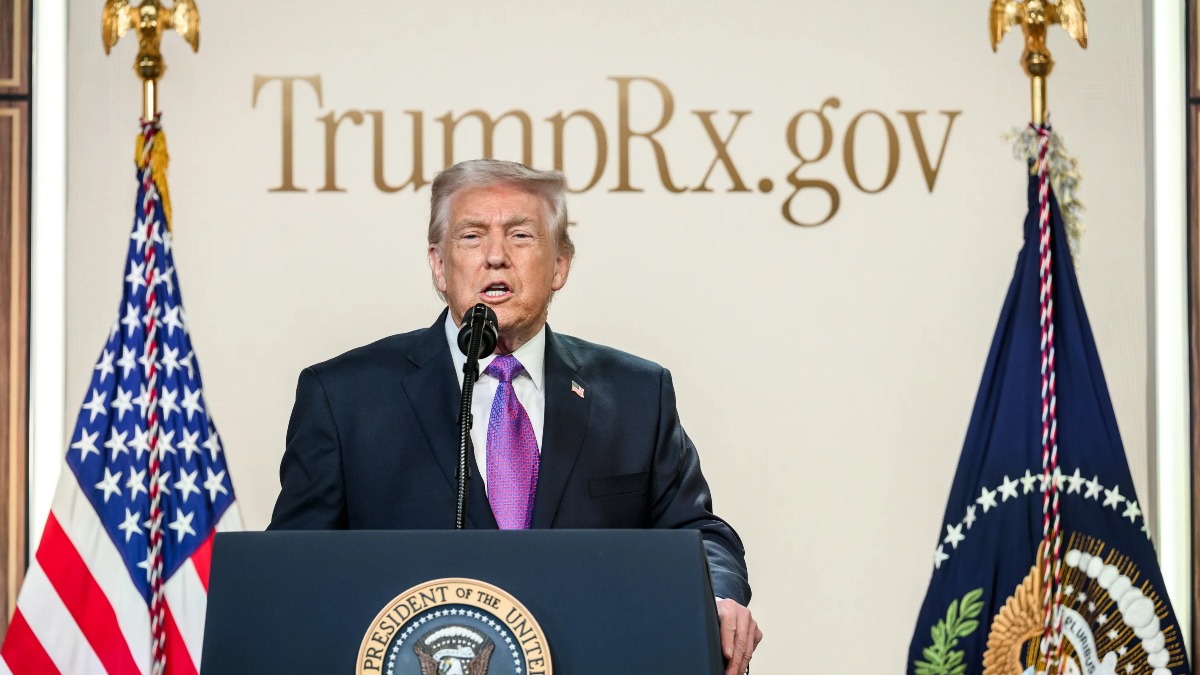
Donald Trump called the country’s biggest consumer price spike in nearly four years “fake inflation” on Thursday, brushing aside a Labor Department report that showed a 0.9-point surge in prices last month. The president made the remarks at a roundtable event in Las Vegas, where energy costs and the ongoing conflict with Iran dominated questions about the economy.
According to The Hill, Trump told the Nevada crowd: “Don’t forget, we’re having some fake inflation because of the fuel, the energy prices.” His administration has framed the price increases as temporary, with Trump himself urging Americans to “see what happens over the next week or so.”
The spike is largely tied to the U.S. conflict with Iran. When Iranian counterstrikes effectively closed the Strait of Hormuz, a critical oil shipping corridor, global energy markets surged. Brent crude briefly shot past $100 per barrel before pulling back to around $92 after a short ceasefire announcement. It surged above $100 again when peace talks broke down in mid-April. Before the war, the benchmark was sitting near $67 per barrel.
The bigger picture on inflation
The Las Vegas event was centered on the administration’s “no tax on tips” policy, which was passed as part of the One Big Beautiful Bill Act last year. Trump told service workers at the roundtable that they were receiving the biggest tax refunds of their lives. He also linked the policy fight directly to upcoming elections, saying: “If we don’t [win the midterms], these policies are going to be taken away from you.”
But outside the event hall, the economic picture looks more complicated. Trump declared inflation “defeated” just three months ago at the World Economic Forum in Davos, claiming grocery prices, energy costs, and mortgage rates were all coming down fast. At the time, U.S. inflation stood at 2.4% year over year.
The Organisation for Economic Co-operation and Development now projects U.S. inflation could hit 4.2% by the end of 2026, the highest rate among all G7 nations. The OECD pointed to both the Iran war’s disruption of global supply chains and the continued weight of Trump’s tariff policies as the main drivers.
Tariffs and trade adding pressure
Even before the war pushed energy prices higher, economists had already flagged tariffs as a significant inflationary force. The U.S. effective tariff rate stood at 10.6% in January 2026, according to Yale’s Budget Lab. That is the highest rate since World War II, outside of tariffs Trump later rescinded in 2025. When Trump took office in January 2025, the rate was roughly 2.3%.
The OECD noted that other countries have hit back with counter-tariffs on U.S. goods, compounding the pressure on consumers. Yale’s Budget Lab estimates that tariffs will continue pushing up the cost of imported cars, electronics, and clothing throughout the year.
House Democrats have been aggressively challenging the administration’s economic direction. A group of lawmakers recently introduced a bill to remove Donald Trump via the 25th Amendment, citing concerns about his fitness to govern amid the escalating crisis.
Energy costs at the center of the fight
The Iran conflict has become the most immediate flashpoint. The closure of the Strait of Hormuz, through which a significant share of global oil flows, sent energy markets into a volatile stretch that is still playing out. Even if fighting stops, analysts warn that prices are unlikely to return to pre-war levels quickly, given the damage to energy infrastructure in the region.
The USDA projects overall food prices will rise 3.6% this year, with grocery costs alone climbing 3.1%, faster than the 20-year average of 2.6%. Beef, fish, vegetables, and baked goods are all expected to become more expensive. U.S. farmers have also raised concerns about the cost and availability of fertilizer, key ingredients for which are typically shipped through the now-disrupted Strait.
Trump has continued striking narco vessels while keeping open a potential return to Iran talks, leaving the energy market outlook uncertain. Thursday’s “fake inflation” remarks are likely to fuel more debate heading into a midterm cycle where affordability is expected to be a central issue for voters.