
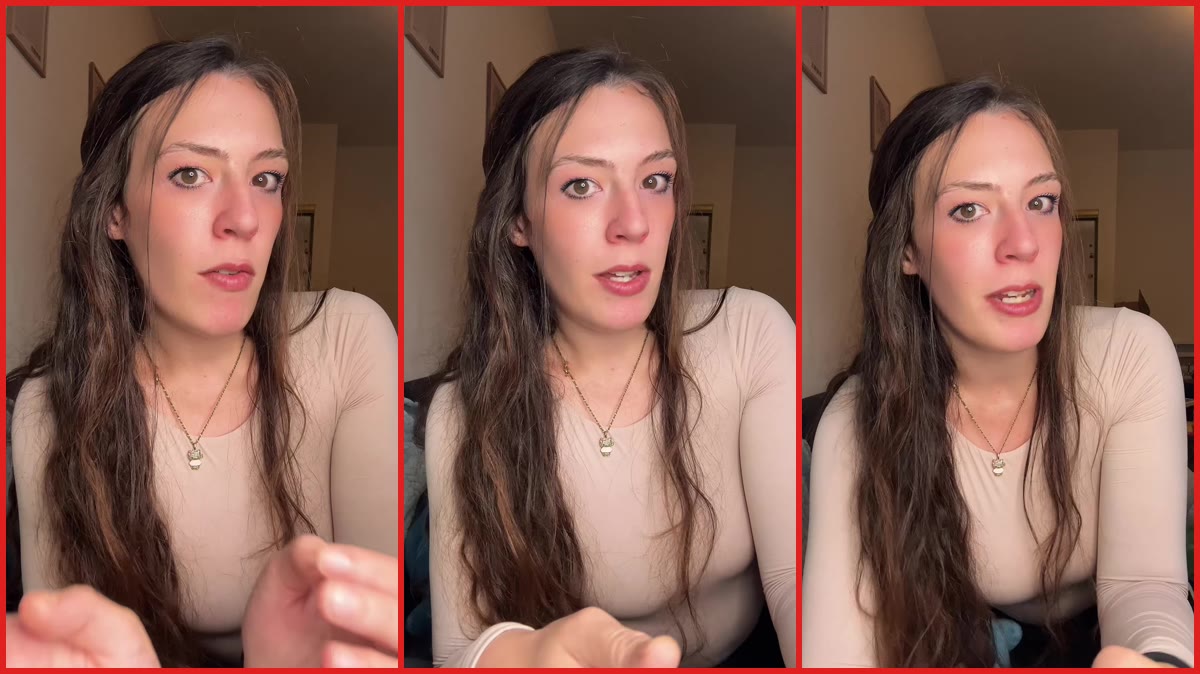
A woman from the Bronx says she discovered her landlord allegedly listed a fake tenant on her rent-stabilized apartment’s DHCR report while charging her above the legal rent for the past three years. In a TikTok video posted to her account @court0o0, the creator, who identifies herself as Louise in the clip, said she had lived in the apartment for about three years without knowing anything was wrong. She said she found out only when the issue came up in housing court.
In the video, Louise said she signed a lease with her landlord and paid rent monthly to the management company. She said she had no idea anything was wrong until she ordered a DHCR report for her apartment. According to her account, the report listed a man she had never heard of as the legal tenant for the entire time she had lived there, and it listed a legal rent of about $200 less than what she had been paying.
The video’s caption says the scam cost her “over $10k.” Louise also said in the video that she realized how common the alleged scam was after she posted about it on social media and many people reached out to say their landlords had done the same thing.
How the alleged scam works, according to the video
In the clip, Louise explained what she called an “illusionary tenant scam.” She said that in a rent-stabilized apartment, a landlord is only allowed to charge the legal rent. She said the landlord allegedly submits a report to the DHCR showing a different tenant and a different rent amount than what is actually being charged, while signing a separate lease with the real tenant for a higher amount.
She walked viewers through an example using her own case. She said her name is Louise and she pays $1,600 a month, while the DHCR report lists “Janet Brown” as the legal tenant paying $1,400 a month. “So the landlord will sign the lease with you, Louise, put you down as the leaseholder, they will charge you $1,600 a month, You pay the rent on time, and meanwhile they’re submitting to the DHCR that the legal rent is $1,400 a month and Janet Brown is the legal leaseholder,” she said in the video.
Louise said she is not in a sublease or sublet and that she is the tenant of the apartment. She said she does not know who the man listed on the report is or whether he is a real person. She said the landlord could either be working with a real person or could have made up the name entirely. The uncertainty over whether the listed name belongs to a real person is a common thread in rental and financial fraud stories, as one woman discovered her accountant had stolen over $150,000 from her family in a three-year Ponzi scheme.
Why she says tenants rarely notice
Louise said in the video that most people never question their rent-stabilized apartments because everything appears legitimate. “Most people are not out here just requesting their DHCR reports and like analyzing them,” she said. She said that until she posted about her experience on social media, she had no idea the alleged scam was so widespread.
She also said there may be no warning signs. She said she did not discover the issue herself; it came up in housing court during an unrelated process.
Louise told viewers in the video to go to the DHCR’s website and request the paperwork for their own apartment, saying tenants are legally allowed to do so. She advised checking the listed legal tenant’s name, the legal rent, the preferred rent, and the rental history. She said a name that does not match, a missing name, or a legal rent that is much lower than what is being paid with no valid reason should be treated as red flags.
She recommended taking the paperwork to someone who works in housing court or legal aid and filing a complaint with the DHCR. She said that if a landlord is found to have committed fraud or violated rent stabilization laws, they could owe the tenant back what was overpaid, potentially up to three times the overpaid amount for each month. She acknowledged the process can take years but said it is worth it to hold landlords accountable.
The video drew a range of responses in its comment section. One commenter wrote, “Omg. It’s been 3 years – I remember when you were living at the shelter. Glad to see you are doing well.” Another wrote, “Ohhh, get yourself that lowered rent and triple damages, girl. This happened to a friend of mine and his landlord had to pay him something like $30K, and this was in the 90s.”
Several commenters asked about the financial implications. One wrote, “Does this mean they owe you money in back refunds?!?!” Another said, “They should decrease your rent and apply a credit so in essence you have a $7200 credit due.” One commenter pointed to a resource, writing, “JustFix.Org you can request your rent history from DHCR plus there are a lot of free resources on there.” Another simply wrote, “So sorry not the point but you are SO well spoken.”