

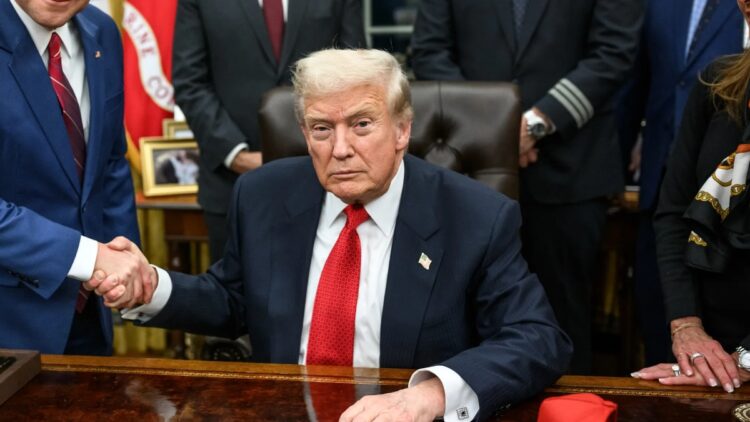
The clock ran out on Congress Friday, and lawmakers did nothing about it. A key 60-day deadline under the War Powers Act came and went while most members of Congress were home on recess, leaving Donald Trump’s Iran war without any formal authorization from Capitol Hill.
According to Fox News, Senate Majority Leader John Thune said most Republicans had no appetite to act on the deadline, noting that lawmakers were receiving “readouts from our military leadership on a somewhat regular basis” and felt that was enough.
The War Powers Resolution of 1973 gives Congress 60 days to either authorize or halt any military operation the president launches without a congressional declaration of war. The US war on Iran began on February 28, 2026, making last Friday the legal deadline. Congress left town Thursday without a vote, and the Senate had already rejected Democratic-led efforts to halt the conflict six times.
Trump says the war is already over
The White House is not even acknowledging the deadline applies. Trump sent a letter to House Speaker Mike Johnson and Senate president pro tempore Chuck Grassley on Friday arguing that for legal purposes, the war has already ended.
“On April 7, 2026, I ordered a two-week ceasefire,” Trump wrote. “The ceasefire has since been extended. There has been no exchange of fire between the United States Forces and Iran since April 7, 2026. The hostilities that began on February 28, 2026, have terminated.”
Defense Secretary Pete Hegseth made a similar argument during Senate testimony the day before, telling lawmakers the ceasefire “pauses, or stops” the 60-day clock. But even as Trump declared hostilities over, he acknowledged in the same letter that the Iranian threat “remains significant,” leaving open the question of what happens next.
Some Republicans want guardrails
Not everyone in the GOP is comfortable with a blank check. Sen. Lisa Murkowski of Alaska has been drafting an Authorization for Use of Military Force (AUMF) that she says is designed to do more than just greenlight the war. She’s calling it a “restraint” on executive power.
Murkowski laid out her position in a Senate floor speech Thursday: “An AUMF recognizes the reality that the U.S. military is already engaged and provides structure and clarity by requiring the administration to define what we’re trying to achieve and the means of achieving it. It requires reporting to Congress, and it brings transparency where little has existed over the past two months.”
Murkowski added that she plans to introduce the measure when the Senate returns from recess the week of May 11, but only if the White House fails to present what she called a “credible plan.”
Sen. Susan Collins of Maine went further, joining Democrats on Thursday for the first time to vote against continuing the war without authorization. According to NPR, Collins was direct: “The president’s authority as commander-in-chief is not without limits. The 60-day deadline is not a suggestion, it is a requirement.”
Sen. John Curtis of Utah also put down a marker, saying he would not back further war funding without a congressional vote. Several other GOP senators, including Thom Tillis of North Carolina and Josh Hawley of Missouri, have indicated they want Congress to weigh in at some point.
Democrats push back hard
Democrats, who have tried and failed six times to force a war powers vote, argue a ceasefire doesn’t mean the conflict is finished. Sen. Tim Kaine of Virginia put it bluntly to Fox News.
“The ceasefire just means bombs aren’t dropping,” Kaine said. “It doesn’t mean that the war’s not on. I mean, we’re still using the U.S. Navy to block anything going into and out of any port in Iran. That’s war.”
That blockade of the Strait of Hormuz has been a flashpoint in the debate. The US has recently ordered troop withdrawals from some European deployments amid the broader Iran standoff, while Iran has publicly mocked Trump following his earlier retreat from a bombing threat.
Some Democrats have floated taking the White House to court if the administration ignores the 30-day wind-down requirement that now kicks in following the lapsed deadline. But even Sen. Adam Schiff of California acknowledged that legal strategy has limits. “It’s hard for me to imagine them constraining this president and his war-making power in any way,” Schiff said. “So I would not want the country to have to rely on this Supreme Court.”
The Senate reconvenes May 11, and that week could bring the first real Republican challenge to Trump’s Iran war powers, or another round of delays.