
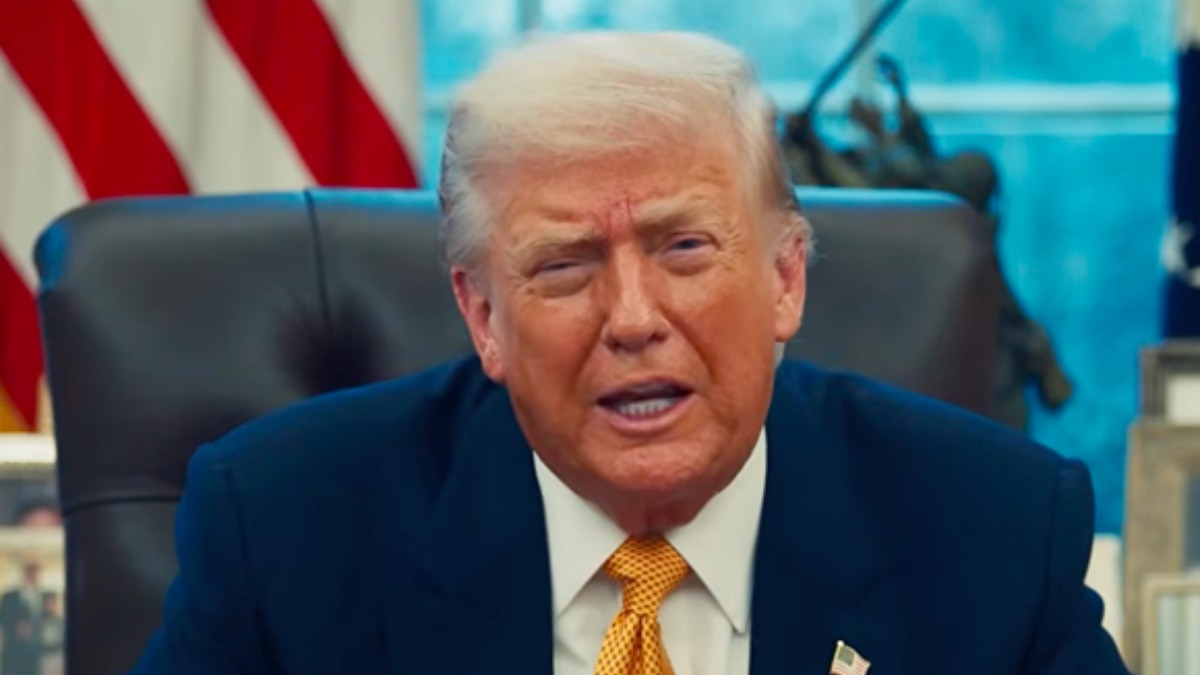
Donald Trump has ordered the withdrawal of about 5,000 U.S. troops from Germany after Friedrich Merz publicly accused the U.S. of being humiliated by Iran. The pullback will take six to twelve months to complete. More than 30,000 American troops will remain in the country when it is done.
The decision was confirmed Friday by Pentagon spokesman Sean Parnell, who said Defense Secretary Pete Hegseth had signed the order. “This decision follows a thorough review of the Department’s force posture in Europe and is in recognition of theater requirements and conditions on the ground,” Parnell said in a statement to The Washington Times. The announcement came just days after Trump publicly threatened to do exactly this following a very public clash with the German chancellor.
The feud started Monday when Merz, speaking at a school in central Germany, went after the U.S. approach to the Iran war. “The Iranians are obviously very skilled at negotiating, or rather, very skillful at not negotiating, letting the Americans travel to Islamabad and then leave again without any result,” Merz said, adding that “an entire nation is being humiliated by the Iranian leadership.” He called the whole affair “ill-considered to say the least.” Trump fired back on Truth Social the next day, writing that Merz “doesn’t know what he’s talking about” on Iran and questioning Germany’s economic performance.
Trump expanded his threat beyond Germany
Trump did not stop at Germany. On Thursday, he expanded his threat to Italy and Spain, saying “I mean, they haven’t been exactly on board” when asked about cutting troop levels in those countries, adding “Yeah, probably will. Why shouldn’t I?” As of last December, there were more than 12,600 active-duty U.S. military personnel in Italy and over 3,800 in Spain, according to CNN.
Merz had tried to ease tensions midweek, saying his personal relationship with Trump remained “good” even as he acknowledged that Germany was “suffering considerably” from the closure of the Strait of Hormuz, the critical waterway through which around 20 percent of the world’s global oil supply had flowed before the war began on February 28. Trump reportedly was not swayed. He told Merz to focus on ending the Russia-Ukraine war instead of commenting on U.S. strategy in Iran.
This is not the first time Trump has threatened to pull troops from Germany. During his first term, Trump announced in June 2020 that he would pull out about 9,500 of the roughly 34,500 troops then stationed in Germany, but the process never actually started. Joe Biden formally halted the planned withdrawal after taking office in 2021. This time, the order has been signed and a timeline has been set.
Democrats and German officials push back
The reaction was sharp on both sides of the Atlantic. Senator Jack Reed of Rhode Island, the top Democrat on the Senate Armed Services Committee, called the move “a serious mistake that will reverberate well beyond this moment,” warning that weakening the U.S. footprint in Europe while Russian forces continue attacking Ukraine would be “a priceless gift to Vladimir Putin.”
Germany’s defense minister took a different tone. Boris Pistorius said Germany had anticipated a U.S. drawback and that Europeans must take greater responsibility for their own security, adding that “Germany is on the right track” in expanding its armed forces and speeding up procurement of equipment.
The troop withdrawal comes against the backdrop of a broader breakdown in U.S.-European relations over the Iran war. Trump had previously threatened to resume bombing Iran after a ceasefire, keeping allies on edge about where the conflict is heading. Tensions have also flared over the Strait of Hormuz, with Iran accusing Trump of lying as the waterway began to reopen. Friction between European leaders and the Trump administration has intensified throughout the conflict, in part because the U.S. launched the war without notifying most NATO allies.