

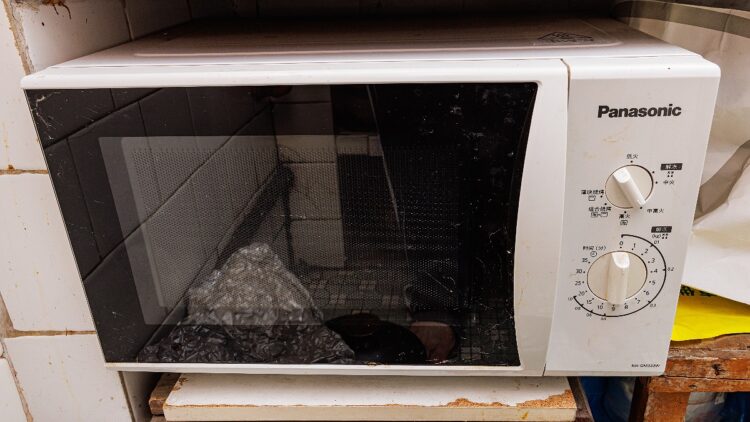
A 10-year-old girl in Bristol, England, is facing the possibility of permanent facial scarring after a squishy toy her friend microwaved exploded and burned them both. The incident is part of a growing wave of injuries tied to a viral trend spreading across TikTok, Instagram, and YouTube, where kids heat gel-filled sensory toys to make them softer and more stretchy. What the videos don’t show is what happens next.
According to BBC News, the girl, identified only as Bella, was at a friend’s house when the toy was frozen and then microwaved for several seconds as part of the challenge. Because the silicone outer layer masked the heat inside, Bella’s friend squeezed it without realizing how hot the gel had become. The toy burst, spraying scalding material across both children’s faces.
Bella’s mother, Charlotte, 42, from Hartcliffe in Bristol, described what she saw when her daughter came home: “I could see straight away her face was bright red, it looked like she’d been whacked in the face and I could see the scald mark and there was skin missing and blisters.”
Charlotte said Bella was referred to a specialist burns unit. Doctors told the family she would need to stay out of direct sunlight for at least two summers, and they were not yet certain whether the injuries would leave permanent scars.
Another Bristol family came forward with the same story
After Charlotte shared a warning on Facebook, another local mother responded almost immediately. Gemma Wells said her own child’s face had been seriously burned after copying the same trend. A photo shared with the post showed a blistering wound on the child’s cheek. “It was one of the scariest things ever. It was traumatising,” Wells wrote.
Charlotte said she had no idea the trend existed until other parents reached out. When she searched for it herself, she found dozens of videos showing children and adults microwaving the toys and presenting the results as harmless fun. “I searched it and saw videos of kids and adults showing ‘how fun it is’ to put the toys in the microwave to make them more elastic,” she told BBC News.
The toy involved in Bella’s case was unbranded and bought from a local shop. However, the trend is most commonly associated with NeeDoh Nice Cubes, a popular gel-filled sensory squeeze toy manufactured by Schylling. The company’s own packaging explicitly warns against heating, freezing, or microwaving the product.
Kids across the US have been hurt too
The injuries are not limited to the UK. In February 2026, a 9-year-old boy in Illinois named Caleb Chabolla was hospitalized with second-degree burns to his face and hands after microwaving a NeeDoh. He was transferred to the Loyola Medicine Burn Center in Maywood, where doctors told his mother, Whitney Grubb, that they had already treated four other children with the same type of injury from the same trend.
Grubb described the moment the toy exploded: “I heard him screaming loudly and saw him take off running toward the bathroom, and he just kept yelling, ‘it burns, it burns.'” His eye swelled completely shut, requiring an ophthalmology consult to rule out vision damage. Fortunately, his sight was not affected.
A 12-year-old girl in Brownsburg, Indiana also suffered second-degree burns on her chin and third-degree burns on her neck after the same thing happened, WTHR reported. The teen had watched videos on TikTok and YouTube encouraging kids to microwave the cube to make it more pliable. She heated it in five-second intervals, then squeezed it. The gel reached over 200 degrees Fahrenheit. A 10-year-old girl in Cleveland, Ohio, also received second-degree burns to her hands and fingers from the same challenge.
Parents and safety experts are urging action
Kelly McElligott, a burn outreach coordinator at Loyola Medicine, said the pattern is familiar. “We see the negative results of TikTok challenges all the time,” she said. “The people who are getting hurt don’t necessarily post the TikToks. You’re just seeing the fun ones where it looks cool.” She also noted that 30% of the burn unit’s patients are children, and that kids rarely check product labels before copying something they see online.
In the UK, the Royal Society for the Prevention of Accidents issued a warning through policy officer Rhiain Reynolds, who said that misusing household appliances “can have devastating consequences.” Reynolds called on parents and caregivers to have direct conversations with children about the risks of copying online challenges. The Ohio School Safety Center also issued a formal warning in March 2026, noting the trend could cause injuries, fires, and appliance damage.
TikTok has said any content that promotes dangerous behavior leading to potential injury violates its community guidelines and will be removed. The platform also says users who search for risky challenges are redirected to its Safety Center. Despite those policies, videos of the challenge have continued circulating.
Charlotte is now pushing for stronger government action, including a potential ban on children accessing social media. “There’s a lot of apps that come across as child-friendly, but actually they can be dangerous for children,” she said. “I don’t want this to happen to anyone else.”
Social media-fueled stunts have led to a string of unexpected injuries in recent months. A rogue squirrel terrorized a university after biting the dean and 17 others in a campus incident that went viral, and a server exposed the cruel prank teenage boys pulled right before leaving a restaurant, sparking widespread outrage online.